
Luigi Oil: What Is Actually in the Cartridge
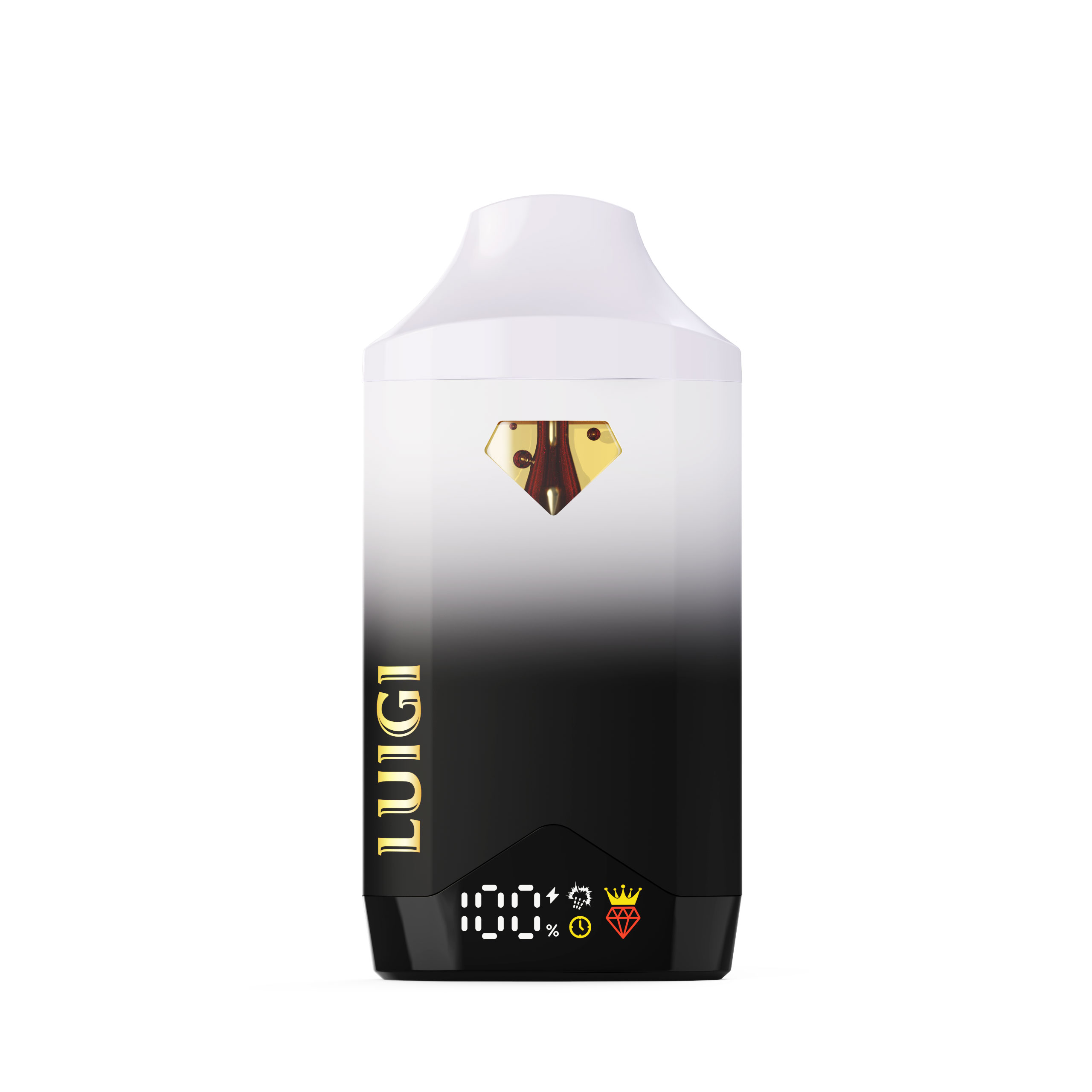
Luigi oil is the part of the product that decides everything: what it tastes like, how hard it hits, how long it lasts and why it costs what it does. The hardware is a shell around it. This page explains what Luigi oil is, how it is made, how it differs from the distillate in cheaper devices, and how to tell the difference in your hand.
Table of Contents
What Luigi Oil Is
Luigi oil is live resin, and on the current generation it is live resin with liquid diamonds reintroduced. Both terms describe how the extract was produced rather than a marketing tier.
Live resin means the plant was frozen immediately after harvest rather than dried and cured, then extracted at low temperature. That sequence preserves a far larger share of the plant’s original terpene content, which is why Luigi oil tastes of a specific strain instead of tasting of a flavour.
The distinction is not cosmetic. Terpenes are volatile and evaporate at temperatures well below those used in conventional refinement, so every stage of processing after harvest is an opportunity to lose them. Skipping the drying and curing stage entirely is the single biggest thing a producer can do to keep them.
How Luigi Oil Is Made
Harvest and immediate freeze. The plant goes into cold storage within hours rather than hanging to dry. This commits the producer to a frozen supply chain from that moment forward, which is a real capital and energy cost.
Cold extraction. The extraction itself runs well below freezing to keep terpenes in solution rather than driving them off. Cold extraction is slower and yields less than a warm process.
Separation and refinement. The crude extract is cleaned without the hot vacuum distillation stage that would strip the aromatic fraction.
Crystallisation, on current oil. THCA is allowed to crystallise out as a solid, then reintroduced into the terpene rich sauce. This raises the cannabinoid load without stripping flavour, because the flavour lives in the sauce rather than the crystal.
Filling and sealing. The finished oil goes into sealed hardware with a batch code that ties it back to the run it came from.
Two of those steps, the cold chain and the lower yield, are why Luigi oil costs several times more to produce than distillate. The price guide works through what that means at the counter.
Luigi Oil Versus Distillate
| Factor | Luigi oil (live resin) | Distillate |
|---|---|---|
| Input material | Fresh frozen whole plant | Trim, older biomass, B grade flower |
| Cold chain required | Yes, from harvest onward | No |
| Terpenes retained | High | Effectively none |
| Flavour source | The plant itself | Added after refinement |
| Tastes strain specific | Yes | No, broadly interchangeable |
| Behaviour in cold | Thickens noticeably | Stays relatively mobile |
| Relative production cost | Several times higher | Lowest |
The flavour row is the one buyers notice immediately. Distillate is stripped during refinement and then has flavour added back, frequently from botanical or synthetic sources rather than from cannabis at all. That is why so many distillate devices across completely unrelated brands taste broadly alike: they are drawing on the same small pool of flavouring supply.
Our full three way comparison covering live resin, distillate and liquid diamonds goes deeper, including where solventless rosin sits.
Where Liquid Diamonds Fit
Liquid diamonds are not a separate oil so much as a modification of this one. THCA crystallises out of the extract as a solid, and that solid is reintroduced into the terpene rich sauce it came from.
The result raises the cannabinoid load while keeping the flavour intact, which is the whole point of doing it. It also makes the oil noticeably thicker, which is why current devices use a mesh coil rather than ceramic and carry a preheat cycle. Thick oil in hardware designed for distillate performs badly, and that mismatch is behind a lot of complaints about devices that will not draw in cold weather.
The dedicated breakdown is on our live resin liquid diamonds page.
Telling Real Luigi Oil From Distillate
Labels are unreliable, so it helps to have checks that work on the device in your hand.
Watch how it behaves in the cold. Distillate stays relatively mobile at low temperature. Live resin with diamonds thickens noticeably and may barely draw until warmed. A device that draws identically at five degrees and twenty five degrees is probably not carrying the oil it claims.
Taste the arc of the draw. Distillate with added terpenes presents its flavour immediately and identically on every pull, often with a slightly sharp or perfumed quality. Live resin builds, and the profile shifts between the inhale and the exhale because you are tasting a complex mixture rather than a single additive.
Look for uniformity. Perfectly uniform, water clear oil is the signature of distillate. Live resin sauce can show slight visible variation or a faint cloudiness.
Check the aftertaste. Added botanical terpenes frequently leave a lingering candy or floral note that does not fade. Cannabis derived terpenes clear more cleanly.
None of these is conclusive alone. The conclusive checks are the batch code and the flavour name, covered in our verification guide. This matters beyond taste: the CDC investigation into vaping associated lung injury traced the large majority of cases to unlicensed THC products.
Storing Luigi Oil Properly
Any extract that retains its aromatic fraction keeps losing it slowly after it reaches you, and storage decides how much of what you paid for you actually get.
Heat is the fastest destroyer. Above roughly thirty degrees Celsius the oil thins enough to seep past the seals, and the volatile fraction evaporates measurably faster. A device left in a parked car through a summer afternoon loses both oil and character, and no warranty covers it.
Light degrades cannabinoids. UV exposure breaks them down, so a device on a sunny windowsill loses potency faster than one in a drawer.
Cold is inconvenient rather than harmful. Thickened oil will not draw until it warms, but nothing is lost. Never apply direct heat to fix it.
Store upright. On its side, oil pools away from the airway and the first draw afterwards is harsh.
Buy from a source that turns stock over rather than one selling from old inventory, and avoid stockpiling more than a few months of supply. Live resin rewards being used reasonably fresh in a way distillate does not, because distillate has nothing left to lose.
Luigi Oil FAQ
What kind of oil is Luigi oil?
Live resin, and on current devices live resin with liquid diamonds reintroduced. It is extracted cold from fresh frozen plant material rather than distilled.
Is Luigi oil distillate?
No. Distillate is stripped of terpenes during refinement and has flavour added back afterwards. Luigi oil keeps the plant’s own terpenes, which is why it tastes strain specific.
Why is Luigi oil thicker than other carts?
The liquid diamond content raises viscosity. That is why current hardware uses a mesh coil and a preheat cycle rather than the ceramic coil that suits thin distillate.
Why will Luigi oil not draw when it is cold?
Below roughly ten degrees Celsius it thickens past the point where it can feed the wick. Warm it in a closed hand or use the preheat function. Never use a lighter.
Does Luigi oil go bad?
It does not spoil, but it loses terpene content slowly, faster in heat and light. Used within a few months and stored properly it holds its character well.
Is Luigi oil stronger than distillate?
Distillate often tests higher on paper. In practice the fuller terpene profile of live resin with diamonds usually produces a more pronounced effect at the same reading.
How can I tell if Luigi oil is real?
Scan the batch code and check the flavour appears in the official index. Physical clues like cold behaviour and aftertaste support that but do not replace it.
What is the difference between Luigi oil and rosin?
Rosin uses no solvent at all, only ice water and pressure. It leads on flavour purity and gives up potency and device life in exchange.
Why Terpenes Decide Everything
Almost every difference between Luigi oil and a cheap cartridge traces back to one class of compounds, and understanding them explains the taste, the price and the effect at once.
Terpenes are the volatile aromatic compounds the plant produces alongside its cannabinoids. They evaporate at temperatures far below those used in refinement, which is the whole problem. Drying and curing removes a substantial fraction before processing even begins, and any sustained heat removes most of what survives.
The individual compounds are not exotic. Limonene occurs in citrus peel and is associated with bright, alert effects. Myrcene appears in hops and mango and correlates with heavier, more sedating experiences. Caryophyllene brings the peppery bite in gas profiles and is unusual in interacting with cannabinoid receptors directly. Pinene smells exactly as it sounds. Linalool carries the floral note in lavender.
What matters practically is that the mixture, not any single compound, produces the character of a strain. A profile is a fingerprint, and reproducing it with a handful of botanical additives is why so many distillate devices across unrelated brands taste broadly alike.
Reading a Lab Report on Luigi Oil
A certificate of analysis is what separates a claim from a fact, and almost nobody reads one properly.
Check the sample identity first. The report should name a batch matching your packaging. A certificate for a different batch is decoration, and passing off a genuine report belonging to something else is the most common way fake lab results circulate.
Read the cannabinoid panel as a total. The number on a box is usually the THC figure alone. The panel shows THCA, delta 9 THC, CBD, CBG and minor cannabinoids separately, and total THC is calculated from THCA and delta 9 together.
Then read the parts nobody advertises. Residual solvents, pesticides, heavy metals and microbial contamination are the panels that actually protect you. A certificate showing only potency is incomplete, and the omission is rarely accidental. Heavy metals matter because they can leach from poor quality hardware rather than from the oil itself.
Understand what a pass means. Laboratories test against action limits set by the state, not against zero. A pass means below the regulatory threshold, which is meaningful but not the same as absent.
This matters more for vapes than for most cannabis products because you are heating and inhaling the result, which is the central finding from the CDC work on vaping associated lung injury. Our verification page covers what to check on a device itself.
Why Luigi Oil Costs What It Does
Two grams at 25 dollars works out to 12.50 a gram, which sits below comparable live resin in most licensed dispensaries. Understanding why requires separating the four costs inside a device.
The extract dominates. Live resin costs several times more to produce than distillate, because it needs fresh frozen material rather than dried flower, a cold chain from harvest onward, and it yields less per pound of input. Liquid diamonds add another processing stage on top. This is the largest single line and the first thing a counterfeiter removes.
The hardware is real. A rechargeable two gram device with a mesh coil, adjustable airflow and a preheat cycle costs several dollars to manufacture before anything goes in it.
Testing is per batch. Screening for potency, pesticides, residual solvents and heavy metals is an expense legitimate producers absorb and illegitimate ones skip entirely.
Verification costs money. Tamper seals, batch codes and a working lookup system exist because counterfeiting dominates this category, and they are the reason a genuine unit can be told from a copy at all.
When you see a device listed at ten dollars, at least one of those four has been removed, and it is almost never the packaging. Full tier pricing is in the price guide.