
Luigi disposables are 2g live resin devices sold ready to use, with no battery to charge and no cart to fit. This is the full collection: every current series from the 25 dollar entry devices to the newest 35 dollar run, plus the bulk packs and master boxes for buyers who want volume. Which series suits you, what 2g actually means in practice, and how to buy without ending up with a counterfeit are set out below the product grid.

Luigi Disposables

Luigi Disposables

Luigi Disposables

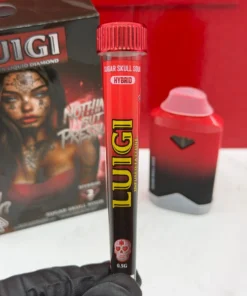
Luigi 2g Disposable

Luigi Disposables

Luigi Disposables

Luigi 2g Disposable

Luigi Disposables

Luigi Disposables
- What a Luigi Disposable Is
- The Series Explained
- Which Series Should You Buy
- What 2g Actually Means
- Runtime and Real Cost
- Bulk Packs and Master Boxes
- Live Resin and Why the Price Sits Where It Does
- Using a Disposable Well
- When One Stops Working
- Storage
- Avoiding Counterfeits
- Frequently Asked Questions
What a Luigi Disposable Is
A disposable is a sealed, self contained device: tank, coil and battery in one body, filled at the factory and used until it is finished. There is nothing to assemble, nothing to charge and nothing to replace. That simplicity is the whole appeal, and it is why the format has taken so much of the market from 510 thread carts that require you to own and maintain a separate battery.
What separates these from most disposables on a shelf is the fill. Every device in this collection carries live resin with liquid diamonds rather than the refined distillate that dominates the category. That distinction is the single biggest factor in how a device tastes, and it is explained in full in our guide on live resin against distillate and liquid diamonds.
The Series Explained
The range is organised into series, and the most common misunderstanding is that a higher number means a stronger device. It does not. Every series uses the same live resin fill, so what changes between them is the hardware generation, the flavor direction and the price.
| Series | Price | Hardware | Flavor direction | Pre roll |
|---|---|---|---|---|
| Series 2 | 25 USD | Earlier generation | Established fruit and candy | No |
| Series 5 | 25 USD | Mid generation | Broad, spans every direction | No |
| Series 6 | 30 USD | Mid generation | Dessert and candy led | No |
| Series 8 | 35 USD | V8, current | Adventurous, newest run | Usually |
Alongside the numbered series sit the Fattone line, which trades pocketability for a larger tank and longer runtime, and individual devices such as the V7 and Series 7 live resin for buyers who want a specific hardware generation.
Which Series Should You Buy
If this is your first Luigi device, buy Series 2 or Series 5 at 25 dollars. Series 2 is the safer of the two because every profile in it is a recognisable version of something familiar. Series 5 is the more useful because it spans every flavor direction, so three devices from it will teach you what you actually prefer.
If you already know you want sweet, Series 6 at 30 dollars is built for exactly that. If you want the current hardware and the newest flavors, and the paired pre roll appeals, Series 8 at 35 dollars is the run to take. And if your actual complaint is how often you have to replace a device, skip the series question entirely and look at the Fattones.
What 2g Actually Means
Two grams is double the common 1 gram disposable, and it is the reason a 25 dollar device is better value than a 20 dollar one gram device rather than worse. The number that matters is cost per gram, not the price on the label, and on that measure the entry devices here run at 12.50 per gram against roughly 20 for a typical 1g competitor.
The 2g format also changes how you should think about a purchase. A device lasting three to four weeks is a monthly decision rather than a weekly one, which makes flavor choice more consequential and palate fatigue a genuine consideration.
Cost Per Gram Against the Category
Headline price is the wrong number to compare disposables on, because tank sizes across the market are not standardised and a cheaper device is frequently a smaller one. Cost per gram is the comparison that survives scrutiny, and on that basis the range sits better than the label suggests.
| What you are comparing | Typical size | Typical price | Cost per gram |
|---|---|---|---|
| Luigi entry devices | 2g | 25 USD | 12.50 USD |
| Luigi mid range | 2g | 30 USD | 15.00 USD |
| Luigi current run | 2g | 35 USD | 17.50 USD, plus a pre roll |
| Common 1g live resin device | 1g | 20 to 25 USD | 20 to 25 USD |
| Common 1g distillate device | 1g | 15 to 20 USD | 15 to 20 USD, different extract |
The row that matters most is the last one. A distillate device can undercut these on cost per gram, and we would rather say so than pretend otherwise. What it cannot do is deliver the strain specific character of live resin, which is the entire reason for the price gap and is set out in our comparison of live resin against distillate.
Bulk Packs and Master Boxes
This collection also carries multi device formats: packs of 10 through to master boxes and cases of 50, 100 and 250. The logic is the same one that applies anywhere: per unit cost falls as the pack size rises, because packaging and handling overhead is spread across more devices.
These suit two buyers. Heavy users who know which flavor they want and would rather not reorder monthly, and stockists buying to resell. If you are in the second group, our wholesale page covers terms rather than the standard checkout. If you are in the first, buying ten of a flavor you have not tried is a mistake worth avoiding, so buy one first.
Live Resin and Why the Price Sits Where It Does
Live resin costs more to produce than distillate at every stage. The plant material has to be frozen immediately after harvest rather than dried, extraction has to be held cold, and purging has to happen without destroying the aromatic fraction the whole process exists to protect. Those constraints are why live resin devices are priced above distillate ones across the entire market, not just here.
What you get for the difference is flavor that tracks the strain rather than a sweetness added back after refinement. If lowest cost per gram is your priority, a distillate device will beat these and we would not pretend otherwise. If you have found distillate devices interchangeable and slightly artificial, this is the specific fix for that complaint.
What Separates a Good Experience From a Bad One
Across everything we get asked about these devices, the same small number of causes explain nearly all of the disappointment, and almost none of them are manufacturing faults. Sorting them by how often they come up is more useful than another list of tips.
| How often | What went wrong | What fixes it |
|---|---|---|
| Most common | The device was not genuine | Buying through an accountable channel and checking the code |
| Very common | Used straight from somewhere cold | Twenty minutes at room temperature before judging it |
| Very common | Draws taken back to back | Pausing long enough for the coil to recover |
| Common | Pulling too hard | A slow steady draw rather than a sharp one |
| Common | Stored on its side | Keeping it upright so oil stays out of the airway |
| Less common | Too much too quickly, particularly a first device | One draw, then several minutes before deciding on another |
If this is your first disposable, how to use a Luigi disposable covers operation properly, and the top row of that table is dealt with further down this page.
When One Stops Working
Most devices that appear to have failed have not. A clogged mouthpiece, a cold thickened tank and a depleted battery account for nearly all cases, and only the last is terminal. If the light comes on but nothing arrives, it is usually a clog and a gentle warm draw clears it. If vapor is thin, it is usually temperature. If the light flashes and nothing happens, the cell is finished, which on a disposable is the end of its life rather than a fault. The full sequence is in our guide on a Luigi disposable that is not hitting.
Storage Across a Collection
Anyone buying from this range regularly ends up owning several devices at once, and that changes the storage question from a single instruction into a small logistics problem. A device in use is being warmed and handled daily. A device waiting its turn is simply sitting somewhere ageing, and where it sits determines what it will taste like when you finally open it.
The practical arrangement is to keep the ones not in rotation together, upright, somewhere cool, dark and stable, and to treat the sealed ones as stock rather than as spares to be scattered around bags and cars. Heat is the variable that does permanent damage, and a device that spent six weeks in a warm room before first use has already lost part of what you paid for. Multi device packs and master boxes make this more consequential, not less, which is worth thinking about before buying ten of anything.
Avoiding Counterfeits
This range is copied heavily, and the majority of poor experiences reported with Luigi devices involve a product that was not genuine. Packaging artwork is cheap to replicate and current counterfeits replicate it well, so a box that looks right proves nothing. The checks that actually work are an intact seal, sharp printing, a legible batch code and an authenticity code that resolves.
Price is the other reliable signal. A 2g live resin device has a floor cost that comes from the extract, so anything offered well below the going rate is arithmetic that does not work. Run the code through our verification page before first use, and our guide to telling real from fake sets out what counterfeiters can and cannot copy. Rules on buying and possessing cannabis products are set by each state rather than nationally, so what applies to you depends on where you are. The state by state overview is a reasonable starting point. Purchases here are for adults who meet the legal threshold where they live.
Frequently Asked Questions
What are Luigi disposables?
Sealed 2g devices containing live resin with liquid diamonds, with the tank, coil and battery built into one body. There is nothing to charge, assemble or replace, and the device is used until it is finished.
Which Luigi series is the strongest?
None of them, in the sense buyers usually mean. Every series uses the same live resin fill, so potency is broadly comparable. What differs is hardware generation, flavor direction and price rather than what is in the tank.
How much do Luigi disposables cost?
Series 2 and Series 5 are 25 dollars, Series 6 is 30 and Series 8 is 35. At 2 grams that is between 12.50 and 17.50 per gram, which compares well against 1g devices that often work out nearer 20 per gram.
Which one should I buy first?
Series 2 or Series 5 at 25 dollars. Series 2 is the safer choice because the profiles are all familiar, and Series 5 is the more informative because it spans every flavor direction, so a few devices from it teach you what you actually like.
How long does a 2g disposable last?
Three to four weeks for moderate daily use, six to eight weeks for light evening use, and around two weeks for heavy all day use. Puff count claims assume a draw length nobody uses, so grams against your own habit is the more reliable measure.
How do I make sure a Luigi disposable is genuine?
Check for an intact seal, sharp printing and a legible batch code, then run the authenticity code before first use. Packaging alone proves nothing because it is cheap to copy. A device priced well below the going rate is the strongest single warning sign.