
Guides
Luigi Disposable Real or Fake: How to Spot a Counterfeit

Feb
Table of Contents
- Luigi Disposable Real or Fake? The 2026 Ultimate Guide to Spotting Counterfeits
- What is a Luigi Disposable?
- 5 Red Flags: How to Spot a Fake Luigi Disposable
- Why Fake Vapes Are Dangerous (The Science)
- Where to Buy Authentic Luigi Disposables
- Frequently Asked Questions (FAQ)
- What Counterfeiters Copy Well, and What They Cannot
- Genuine Against Fake, Side by Side
- Where Fakes Actually Enter the Supply Chain
- Why the Price Is Usually the Tell
- What to Do If You Already Bought One
- Checking Before You Use, Not After
- Frequently Asked Questions
- Luigi Disposable Real or Fake: Quick Answers
- Real or Fake at a Glance
Luigi Disposable Real or Fake? The 2026 Ultimate Guide to Spotting Counterfeits
In the rapidly evolving world of vaping, the name Luigi (often associated with Luigi Oil) has become a major player in the disposable market. However, with popularity comes the inevitable wave of “knockoffs.” If you’ve found yourself asking, “Is my Luigi disposable real or fake?” you aren’t alone.
As of 2026, the market is flooded with high-quality counterfeits that look almost identical to the real thing. Using a fake vape isn’t just a waste of money, it’s a genuine health risk. This guide will walk you through every detail you need to verify your device, understand the brand’s legitimacy, and protect your lungs from “mystery oil.”
What is a Luigi Disposable?
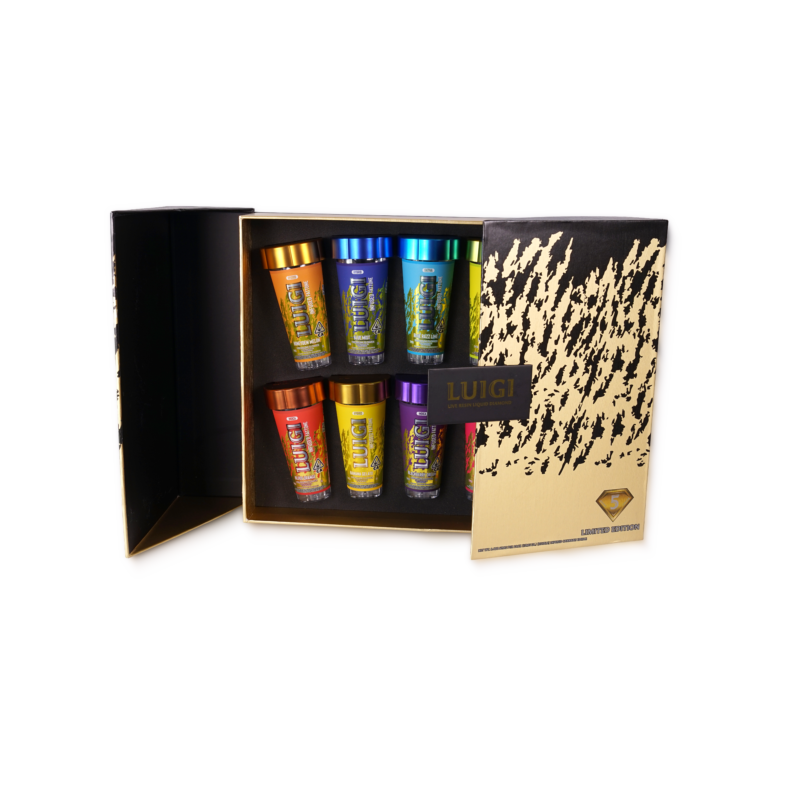
The Luigi brand, specifically Luigi Oil, is a California-based company known for its high-potency cannabis oil disposables and “Blinkers.” They have carved out a niche for themselves in over 100 dispensaries across California, often recognized by their vibrant, Mario-themed aesthetic (though they operate as an independent entity).
The “Grey Market” Dilemma
The biggest challenge with Luigi disposables is that they are highly targeted by “grey market” manufacturers. Because the brand has a “street-cool” aesthetic, unlicensed labs often produce packaging that looks exactly like Luigi’s official designs and sell them to smoke shops or “plugs” across the USA.
5 Red Flags: How to Spot a Fake Luigi Disposable
If you didn’t buy your device from a licensed California dispensary, there is a high probability you are holding a replica. Here is the checklist to determine the authenticity of your device.
1. The QR Code Verification (The Gold Standard)
Authentic Luigi products come with a scratch-off verification sticker.
- Real: The QR code should lead you directly to the official
luigioil.comdomain. Once you enter the unique serial number, it should tell you if the code has been scanned before. - Fake: The QR code might lead to a “copycat” website (e.g.,
luigivape-verify.com) or a broken link. If the code has already been scanned 50 times, you have a counterfeit.
2. Packaging Quality and Typos
Counterfeiters often rush the printing process. Look for:
- Spelling Mistakes: Check the ingredient list and warnings. Fakes often misspell words like “thoroughly” or “nicotine.”
- Blurry Graphics: Authentic Luigi packaging is crisp with high-contrast colors. If the “Luigi” character looks blurry or the colors seem “washed out,” it’s a fake.
- Flimsy Cardstock: Real packaging is rigid and premium. Fake boxes often feel thin and easily collapsible.
3. Hardware Build and “The Blinker” Test
Luigi disposables are known for their “Blinker” capability, meaning they are built to handle long, sustained hits.
- Weight: Genuine devices have a specific heft due to the high-quality lithium-ion battery. Fakes often feel “hollow” or light.
- Charging Port: Most 2026 Luigi models use USB-C. If you see a micro-USB port on a newer model, be suspicious.
- The Intake Holes: Check the bottom airflow. On fakes, these are often unevenly drilled or blocked by plastic “flash” from the mold.
4. Oil Consistency and Color
While you shouldn’t judge a book by its cover, the oil tells a story.
- Authentic Oil: Clear, golden-amber, and moves very slowly (high viscosity).
- Fake Oil: Runny, dark brown, or unnaturally clear (water-white). If you see “floaties” or cloudy sediment, stop using it immediately.
5. Price Point
If you are buying a Luigi disposable for $15, $20 at a local gas station, it is almost certainly fake. Authentic Luigi Oil products generally retail for $35, $60 in licensed dispensaries due to the cost of lab testing and high-quality distillate.
Why Fake Vapes Are Dangerous (The Science)
Using a counterfeit Luigi disposable isn’t just about bad flavor; it’s about what’s inside the “mystery juice.” Unregulated labs skip the $1,000+ lab tests that real companies pay for.
| Dangerous Additive | Potential Health Risk |
| Vitamin E Acetate | Linked to EVALI (Lung scarring and failure). |
| Heavy Metals | Lead, Nickel, and Chromium leaching from cheap coils. |
| Pesticides | Residual chemicals from low-grade flower extraction. |
| Synthetic Cannabinoids | “K2” or “Spice” which can cause seizures or heart palpitations. |
Where to Buy Authentic Luigi Disposables
To ensure you are getting the real deal in the USA, follow these sourcing rules:
- Use Weedmaps: Search for “Luigi Oil” on Weedmaps or Leafly to find licensed retailers.
- Avoid Social Media “Plugs”: Telegram and Instagram sellers are the primary source of counterfeit Luigi hardware filled with home-brew oil.
- Check the Exporter Info: Authentic boxes will list the California-based manufacturer and distributor details.
Frequently Asked Questions (FAQ)
Is Luigi Oil a real company?
Yes, Luigi Oil is a legitimate California-based cannabis brand. They have a dedicated team in Los Angeles and are stocked in reputable dispensaries.
My Luigi vape is blinking 10 times: is it fake?
Not necessarily. A blinking light usually indicates a dead battery or a short circuit. However, if the device is brand new and blinking, it may be a “dud” or a low-quality counterfeit with a faulty battery.
Can I buy real Luigi disposables online?
Only if you are in a state with legal delivery (like California) and are buying through a licensed dispensary portal. Shipping THC products across state lines via the USPS is illegal and a common front for scam websites selling fakes.
The “Luigi disposable real or fake” debate usually comes down to where you bought it. If the price was too good to be true, the packaging has typos, or the QR code doesn’t verify on the official site, toss it. Your health is worth more than a $20 “Blinker.”
What Counterfeiters Copy Well, and What They Cannot
Understanding a fake is easier once you know which parts are cheap to replicate and which are not. Printed packaging is cheap. A convincing box, a matching color scheme and a copied logo cost a counterfeiter almost nothing, which is why packaging alone has stopped being a reliable test. The parts that are expensive to fake are the ones worth checking.
| Element | How easy to fake | How much it tells you |
|---|---|---|
| Outer box artwork | Very easy | Almost nothing on its own |
| Logo and color match | Very easy | Little, unless obviously wrong |
| Batch code printing | Moderate | Useful, look for smudging and reused codes |
| Working authenticity code | Difficult | High, this is the strongest single check |
| Hardware internals and airflow | Difficult | High, but only after purchase |
| Oil consistency and behaviour | Difficult | High, though by then you have paid |
The practical takeaway is that the checks worth doing before you pay are the code and the seller, not the artwork. Everything on the top half of that table can look perfect on a device that contains something else entirely.
Genuine Against Fake, Side by Side
| What you are looking at | Genuine device | Common counterfeit |
|---|---|---|
| Seal | Intact, evenly applied | Loose, resealed, or missing |
| Print quality | Sharp edges, consistent color | Slight blur, off color, spelling errors |
| Batch code | Legible, unique, checks out | Smudged, absent, or repeated across units |
| Authenticity code | Scans and resolves correctly | Dead link, no code, or a code that fails |
| Airflow | Consistent draw | Tight, whistling, or inconsistent |
| Oil color | Clear to amber depending on strain | Very dark, cloudy, or separating |
| Price | In line with the going rate | Noticeably below market |
Where Fakes Actually Enter the Supply Chain
Counterfeits do not appear randomly, they concentrate in predictable channels. Unlicensed corner shops and gas stations are the largest single source, because those outlets sit outside cannabis licensing and nobody audits what reaches the shelf. Social media sellers are the second, particularly accounts that take payment through apps and ship without any paperwork. Marketplace listings on general ecommerce platforms are the third, where a listing can look identical to a legitimate one while the fulfilment behind it is anything but.
Licensed dispensaries and direct orders from a store that holds its own stock are the two channels where the risk drops sharply, because in both cases somebody is accountable for what was sold and there is a record of the transaction. That difference is covered in more depth in our guide to buying locally against ordering online.
Why the Price Is Usually the Tell
If one signal deserves more weight than buyers give it, this is the one. A 2g live resin device has a floor cost that comes from the extract itself, so a device offered well below the going rate is not a clearance bargain, it is arithmetic that does not work. When somebody sells a 35 dollar device for 15, the money has to come from somewhere, and it comes out of what is in the tank.
The going rates across the current series are set out in our pricing guide. Knowing them turns a vague suspicion into a concrete check you can run in a few seconds at the counter.
What to Do If You Already Bought One
If the device you have fails these checks, the priority is to stop using it rather than to finish it. Counterfeit hardware is not tested, and the contents are unknown by definition, which is a different risk category from a genuine product you happen to dislike.
- Stop using it. Unknown contents are the whole problem. Do not work through the tank to get value out of it.
- Keep the packaging. The box, the code and the receipt are what any complaint or refund will rest on.
- Go back to the seller. A legitimate retailer that sold a counterfeit unknowingly will usually want to know. One that refuses to engage has told you what it is.
- Report the outlet. In regulated states, unlicensed sales of cannabis products can be reported to the state regulator, and that is how bad outlets eventually get dealt with.
- Check the code on your next purchase before you use it. The check takes seconds and it is the whole point.
Our verification page will log a code for authentication, and the QR code walkthrough explains what a legitimate scan should look like so you can tell a real check from a decorative sticker.
Checking Before You Use, Not After
Almost every account of a bad experience follows the same sequence. The device was bought somewhere convenient, it was used immediately, something felt wrong, and only then did anyone look at the box. Reversing those last two steps solves most of it. Check the seal, check the print, check the code, then use it. Sixty seconds of checking is the difference between a product you can trust and a gamble on somebody else’s supply chain.
For background on why unregulated vape hardware carries real risk, the CDC material on e cigarette and vaping products is worth reading, and our own safety guide covers the testing side.
Frequently Asked Questions
What is the fastest way to tell if a Luigi disposable is fake?
Check the authenticity code on the packaging. It is the single hardest element for a counterfeiter to replicate, and unlike packaging artwork it either resolves correctly or it does not. Everything else on the box can look perfect on a fake.
Can packaging alone prove a device is genuine?
No, and this is the most common mistake buyers make. Printed boxes are cheap to copy and current counterfeits copy them well. Use packaging as a first filter for obvious errors such as typos and blurred print, then rely on the code.
Is a cheap Luigi disposable always fake?
Not always, but a price well below the going rate is the strongest warning sign there is. A 2g live resin device has a real floor cost, so a heavy discount usually means the contents do not match the label.
What should I do with a fake I already bought?
Stop using it, keep the box and any receipt, and take it back to the seller. If the outlet is unlicensed and you are in a regulated state, it can be reported to the state regulator. Do not finish the tank to get your money worth.
Do gas stations sell genuine Luigi disposables?
As a rule, treat anything from an unlicensed convenience outlet with suspicion. Those channels sit outside cannabis licensing, nobody is checking batch records, and they are where counterfeits most reliably surface.
Does a QR code on the box mean it is real?
Only if it actually resolves and checks out. Counterfeits print codes that lead nowhere, lead to a copied page, or simply do not scan. A printed square is not a verification, the result of scanning it is.
Luigi Disposable Real or Fake: Quick Answers
What settles luigi disposable real or fake fastest?
The flavour name. Deciding luigi disposable real or fake takes seconds when the profile is not in the official range, because an invented name cannot be cross checked against any batch record.
Does packaging quality answer luigi disposable real or fake?
Barely. Branded empty hardware and boxes are sold openly in bulk, so the outside of a counterfeit is often genuine. Judging luigi disposable real or fake by print quality is the most common mistake buyers make.
Does the code prove luigi disposable real or fake?
It is the strongest single test. A code resolving to a matching batch on the correct domain is the best evidence available on the luigi disposable real or fake question, because it tests something counterfeiters cannot buy.
Can price alone decide luigi disposable real or fake?
Only partly. A device far below the going rate had something removed from its cost structure, usually the extract. But counterfeiters who price at full retail defeat that check, so price is a supporting signal on luigi disposable real or fake rather than a conclusive one.
Does the seller matter for luigi disposable real or fake?
Enormously. A messaging app account with no fixed address is the highest risk channel there is, and where you bought a device predicts the luigi disposable real or fake outcome before you inspect anything.
Can hardware features indicate luigi disposable real or fake?
Yes, and they are hard to fake. A device sold as Series 8 with no preheat cycle fails the luigi disposable real or fake test on physical grounds, because that is a component rather than a printed claim.
What if a code says already redeemed?
On a sealed device that is a strong luigi disposable real or fake signal pointing to fake. It usually means a genuine code was photographed and reprinted across a counterfeit run.
Does oil colour help with luigi disposable real or fake?
Least of all the checks. Colour and clarity vary legitimately between profiles and batches, so any luigi disposable real or fake conclusion drawn from oil appearance alone is close to guesswork.

What should I do if the answer is fake?
Do not use it. Keep the device, packaging and purchase records, start a chargeback promptly, and report the seller. A luigi disposable real or fake verdict of fake matters because unregulated oil has been found to contain vitamin E acetate, pesticides and heavy metals.
Can you check luigi disposable real or fake for me?
Yes, including devices bought elsewhere. Run it through the cart checker then send photographs through the contact page.
Real or Fake at a Glance
Deciding luigi disposable real or fake comes down to two checks that counterfeiters cannot solve: does the batch code resolve to a matching record, and does the flavour exist in the official range. Everything else is supporting evidence. Packaging quality answers luigi disposable real or fake badly because branded boxes are sold openly in bulk, and oil colour answers luigi disposable real or fake worse still because it varies legitimately between profiles. Where you bought it predicts the luigi disposable real or fake outcome more reliably than anything you can see, and a device that fails the luigi disposable real or fake test should not be used while you work out what it is.
In short, the luigi disposable real or fake question is settled by the code and the flavour name, and every other signal is corroboration. Treat any luigi disposable real or fake verdict you cannot support with one of those two checks as unresolved rather than negative.
